Learning to drive and practising
Contents
- Introduction
- Start with professional driving lessons
- Choosing a driving instructor
- Practising with family or friends
Introduction
Learning to drive is one of the most important skills you’ll develop in your life. Done well, it will keep you and others safe on the road for decades to come.
This page explains how to get the most from your driving lessons, how to practise safely with family or friends, and how to make sure you have the right insurance and plates before you drive.
Start with professional driving lessons
Top tip
The best way to learn to drive is to start by taking driving lessons with a driving instructor before you do anything else.
Research has found that those who have not taken any driving lessons before their theory test were:
- 16% more likely to fail the multiple-choice part of their theory test first time
- 25% more likely to go on and fail their driving test first time
About this data
Taking driving lessons with an instructor from the start gives you the knowledge and skills you need to pass both tests and become a safe driver.
Recommended approach to learning to drive
To give yourself the best chance of success, follow these steps.

Choose a driving instructor.

Start studying The Highway Code.

Start taking driving lessons with your instructor.

Start studying and practising for your theory test.

Book and take your theory test when your instructor thinks you are ready.

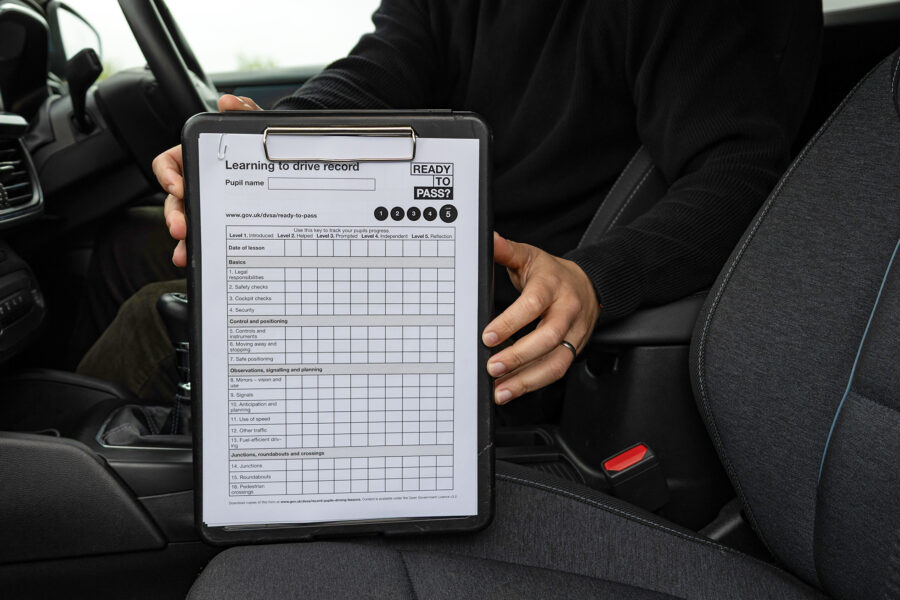
Start doing private practice between your driving lessons, when your instructor says you’re ready.

Book your driving test only when your instructor agrees you are ready to pass and drive on your own.
Your driving instructor is best placed to judge when you are ready for each stage of learning. Trust their advice.
Choosing a driving instructor
All driving instructors must be registered with the Driver and Vehicle Standards Agency (DVSA).
Look for an instructor who:
- is reliable
- adapts their teaching to suit you
- focuses on helping you become a safe driver – not just on getting you through the test
What to ask and check
Before you book, it’s worth asking them questions like:
- how will you adapt your teaching to how I learn?
- how will you keep me updated on my progress?
- what happens if I need to cancel a lesson?
- are you fully qualified or a trainee instructor?
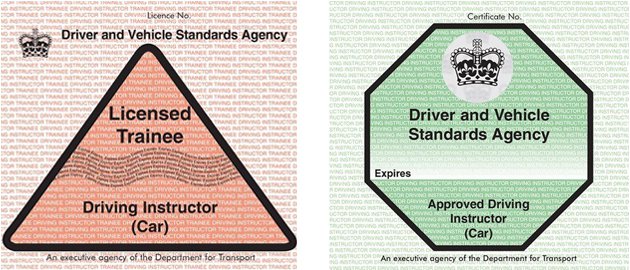
You can check that your instructor is qualified by looking for the badge displayed on their windscreen:
- a green badge means they are a fully qualified driving instructor
- a pink badge means they are a trainee instructor
Practising with family or friends
Once you have reached a suitable skill level, your driving instructor may suggest you practise with a family member or friend between lessons.
Combining professional lessons with private practice can help you build experience more quickly. The more driving experience you have before your test, the safer you are likely to be after you pass.
Your supervisor must:
- be 21 or over
- have held a full driving licence for at least 3 years
- be qualified to drive the type of vehicle you are learning in
Insurance
You must have the right insurance before you practise privately. Check that you and the vehicle are properly insured for learner driver use.
Driving without insurance can result in an unlimited fine, a driving ban, and 8 penalty points on your licence.
Displaying the correct plates
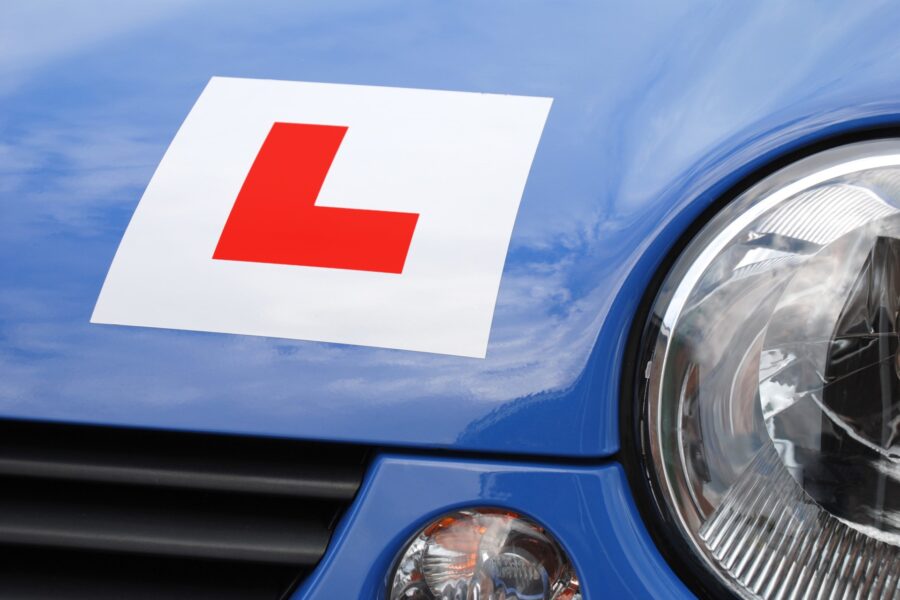
You must display L plates (or D plates in Wales) on the front and back of the vehicle when you are practising.
Driving without the correct plates can result in a fine and penalty points.
Helping a learner driver?
Find out how you can support someone learning to drive, whether you’re supervising their practice sessions or helping in other ways. It’s a team effort involving you, your learner and their driving instructor.